
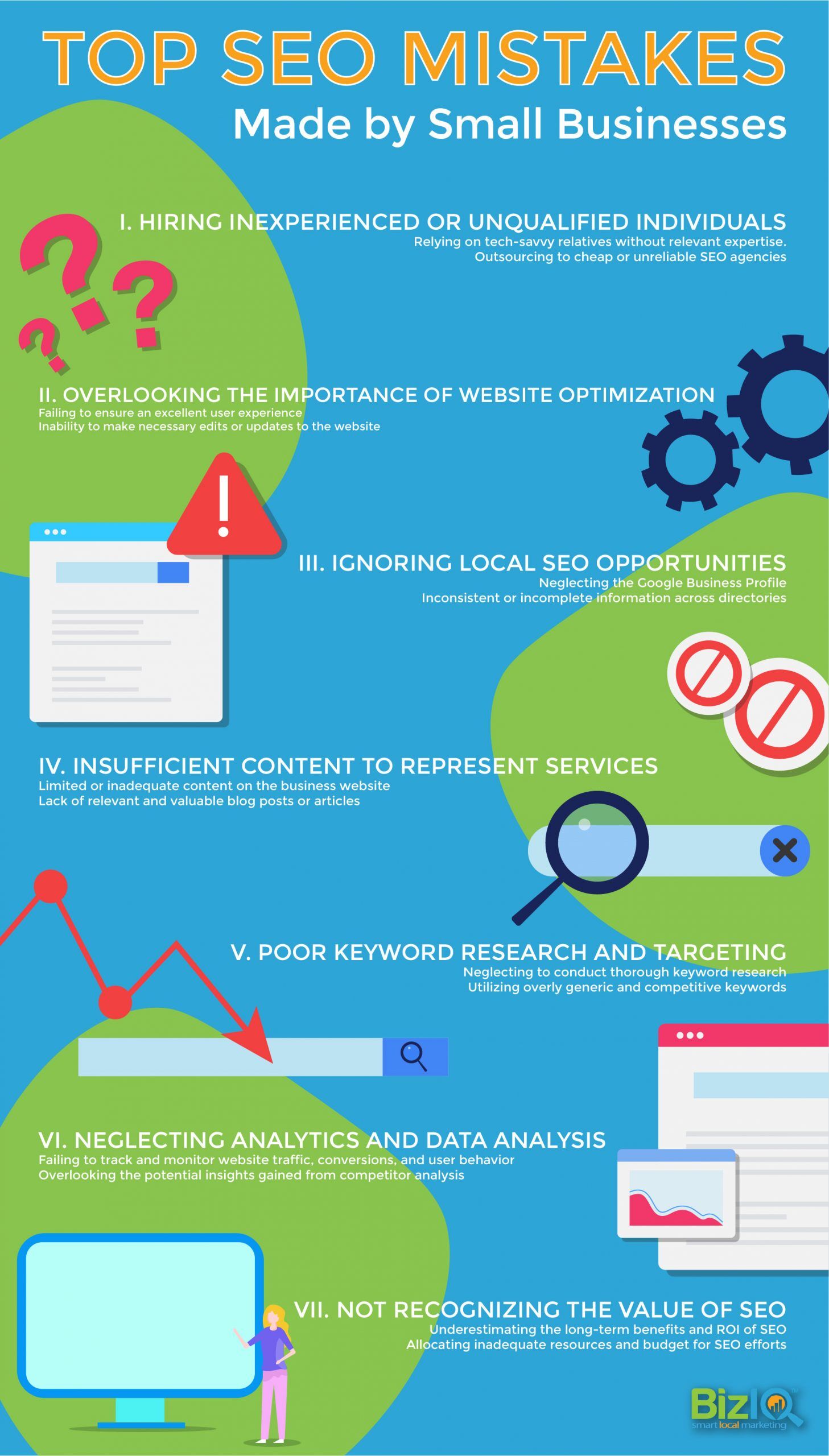
Navigating the SEO Landscape: Avoiding Common Pitfalls for Small Businesses
For small businesses, an effective search engine optimization (SEO) strategy is not merely an option but a critical imperative for survival and growth in a competitive digital marketplace. However, the pursuit of organic visibility is often fraught with missteps that can derail progress and waste valuable resources. This analysis examines prevalent mistakes in small business SEO, contrasting common approaches to illuminate a clearer path forward.
The Peril of Keyword Stuffing vs. Intent-Driven Optimization
A significant pitfall for many small businesses attempting SEO is an outdated reliance on keyword stuffing – the practice of excessively repeating target keywords within content in hopes of higher rankings. This strategy, once marginally effective, is now detrimental. Modern search engine algorithms, particularly those incorporating natural language processing like BERT and MUM, prioritize content that genuinely addresses user intent and provides comprehensive, natural language answers. Pages saturated with exact-match keywords often read poorly, offer limited value, and are prone to ranking penalties.

Conversely, an intent-driven optimization approach focuses on understanding the ‘why’ behind a user’s search query. Instead of merely scattering keywords, this method involves crafting content that anticipates and thoroughly answers user questions, explores related topics, and uses semantically relevant terms. For instance, a small bakery shouldn’t just repeat “best cupcakes in [city]”; it should create content that details the quality of ingredients, the baking process, customer testimonials, and even the story behind their unique flavors, all while naturally incorporating target phrases. This not only enhances user experience, leading to lower bounce rates and higher engagement signals, but also aligns with how contemporary search engines evaluate content for relevance and authority.
Overlooking Local SEO: The Cost of Global Aspiration for Local Reach
Many small businesses, especially those with physical locations or serving specific geographical areas, make the critical error of neglecting robust local SEO. They might invest in broad national keywords or generic content, failing to capitalize on the immediate, high-intent traffic generated by local searches. This oversight stems from a misconception that a website alone suffices for local presence, ignoring the specialized mechanisms search engines use to connect local users with local businesses.
The solution lies in meticulous local search optimization. This begins with a fully optimized and consistently managed Google My Business (GMB) profile, which serves as the cornerstone for local pack and map results. Ensuring consistent Name, Address, Phone (NAP) information across all online directories (Yelp, industry-specific sites, social media) is paramount, as discrepancies can confuse search engines and erode trust. Furthermore, local content strategies, such as blog posts about local events, community involvement, or specific neighborhood services, coupled with location-specific keywords (e.g., “plumber in [district name]”), directly address the needs of local searchers. By prioritizing local SEO, small businesses tap into a segment of their audience that is often ready to convert immediately, providing a direct competitive advantage against businesses that only focus on broader, less targeted keywords.
According to Google, “76% of people who search for something nearby on their smartphone visit a business within a day, and 28% of those searches result in a purchase.”
Key Insight: For small businesses, local SEO is not just about visibility; it directly drives immediate, high-intent conversions and foot traffic, representing a critical revenue stream.
The Pitfall of Neglected Technical SEO and Site Performance
While compelling content and strategic backlinks are vital, their impact can be severely undermined by a weak technical foundation. A common mistake for small businesses is to overlook the underlying technical health and performance of their website. Issues such as slow page loading speeds, non-mobile-friendly design, broken internal links, duplicate content, convoluted site architecture, and poor Core Web Vitals often go unaddressed. These technical flaws create significant barriers for search engine crawlers and, more importantly, for potential customers.
Search engines prioritize user experience, and a technically sound website is fundamental to delivering that. A slow site frustrates users, leading to higher bounce rates and diminished engagement, which negatively impacts rankings. Given Google’s mobile-first indexing, a non-responsive or poorly optimized mobile site is a direct impediment to organic visibility. Core Web Vitals – including Largest Contentful Paint (LCP), First Input Delay (FID), and Cumulative Layout Shift (CLS) – are direct ranking factors that measure user-centric loading, interactivity, and visual stability. Regular technical audits, image optimization, leveraging browser caching, ensuring a logical site hierarchy, implementing appropriate schema markup, and maintaining a robust XML sitemap are non-negotiable for establishing a discoverable and user-friendly online presence. Neglecting these foundational elements means any investment in content or link building will yield suboptimal returns.
Research indicates that a one-second delay in mobile page load time can lead to a 20% decrease in conversions.
Key Insight: Site performance and technical hygiene are no longer luxuries but critical factors directly impacting user engagement, conversion rates, and ultimately, the revenue generated by small businesses.
The Temptation of “Quick Fixes” vs. Sustainable Authority Building
In the competitive digital landscape, small businesses are often lured by promises of rapid SEO results through “quick fixes.” This can manifest as engaging in manipulative tactics like purchasing low-quality backlinks, participating in link farms, comment spamming, or mass-producing thin, unoriginal AI-generated content without human oversight or value addition. While these approaches might offer fleeting, minor gains, they almost invariably lead to severe penalties from search engines, long-term damage to domain authority, and a complete loss of trust. Google’s algorithms are increasingly sophisticated at detecting and penalizing such black-hat or gray-hat practices, making these strategies a high-risk, low-reward proposition.
The authoritative and sustainable approach to SEO involves building genuine expertise, experience, authoritativeness, and trustworthiness (E-E-A-T) over time. This entails consistently creating high-quality, original, and valuable content that truly serves the target audience. For backlink acquisition, the focus shifts from quantity to quality and relevance, earning links through legitimate outreach, guest posting on reputable sites, forging industry partnerships, and public relations efforts that highlight genuine value. This long-term investment in ethical, white-hat SEO not only builds a resilient and respected online presence but also ensures compliance with search engine guidelines, safeguarding against future algorithmic updates and fostering enduring organic growth. Small businesses must recognize that SEO is a marathon, not a sprint, and sustainable success is built on a foundation of integrity and value.
How quickly can a small business expect to see SEO results?
SEO is a long-term investment, not a quick fix. While some minor improvements from technical optimizations or local SEO tweaks might be visible within a few weeks, significant organic ranking improvements and substantial traffic increases typically require a sustained effort of 6 to 12 months, and often longer for highly competitive niches. Businesses should view SEO as continuous strategic work rather than a one-time project, as algorithms evolve and competition intensifies.
Is social media integration important for small business SEO?
While social media activities are not direct ranking factors for SEO, they play a crucial indirect role. Strong social media presence can increase brand visibility, drive referral traffic to your website, and amplify content reach, which can indirectly lead to more backlinks and positive brand mentions – both of which are beneficial for SEO. Furthermore, an active social presence can enhance brand trust and authority, factors search engines increasingly consider.
Should small businesses hire an SEO agency or do it in-house?
The decision to hire an agency or manage SEO in-house depends on several factors, including internal expertise, available resources, and the complexity of your SEO goals. In-house management is feasible if you have dedicated staff with a solid understanding of SEO fundamentals and the time to execute. However, for specialized needs, advanced strategies, or if internal resources are limited, an experienced and reputable SEO agency can provide invaluable expertise, tools, and scalable solutions. Always conduct thorough due diligence when selecting an agency, focusing on transparency, proven results, and a clear understanding of their methodology.
The landscape of SEO for small businesses is not about finding a single ‘best’ solution, but rather about consistently avoiding common pitfalls and implementing a disciplined, multi-faceted strategy. Prioritizing user intent, mastering local signals, maintaining technical site health, and building legitimate authority through quality content and strategic backlinks will yield far more sustainable returns than chasing ephemeral trends or engaging in outdated tactics. Focus on foundational excellence and genuine value; lasting search visibility and business growth will follow.