
Mastering Selection: Your Definitive Guide to Choosing the Best Contour Pillow
The quest for truly restorative sleep often leads us to specialized tools, and among the most impactful is the contour pillow. Designed to support the natural curve of your neck and spine, a well-chosen contour pillow can alleviate discomfort and enhance sleep quality significantly. Navigating the myriad of options requires understanding key features tailored to your unique needs.
Key Takeaway: A properly selected contour pillow is essential for spinal alignment and improved sleep health.

Understanding Contour Pillow Basics and Benefits
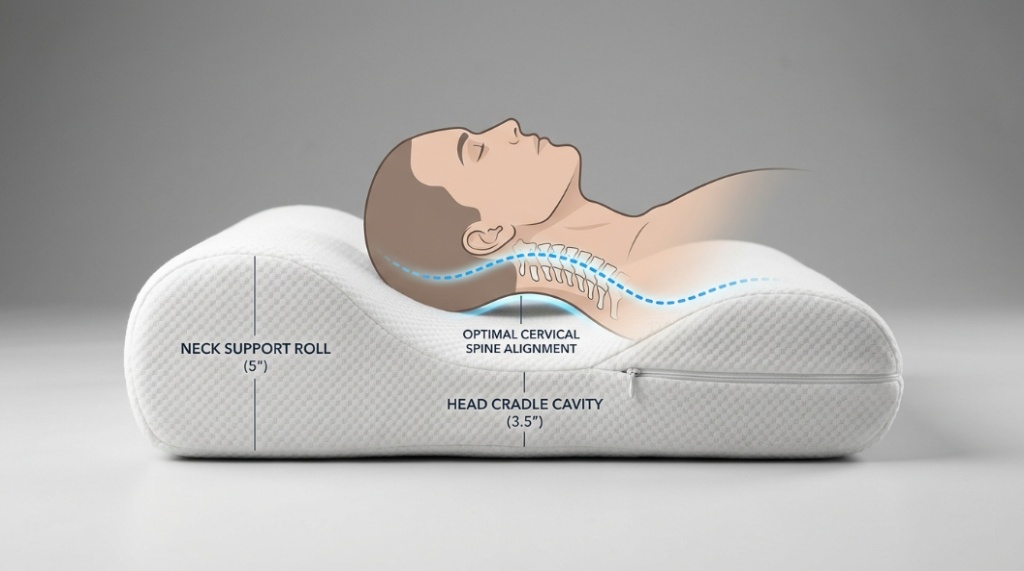
Contour pillows are ergonomically shaped to cradle the head and support the cervical spine’s natural curve. They maintain their shape to fill the gap between your neck and mattress, promoting optimal alignment. This design reduces pressure points, alleviates neck and shoulder tension, and can mitigate chronic pain by preserving the neck’s natural lordotic curve.
Key Takeaway: Contour pillows provide targeted ergonomic support, crucial for maintaining spinal alignment and reducing neck discomfort.
Key Factors in Material and Firmness
The core material significantly impacts support and feel. Memory foam offers personalized pressure relief and excellent support, conforming closely to your head and neck. Latex provides responsiveness, durability, and breathability. Gel infusions often enhance memory foam by dissipating heat. Firmness is critical: too soft, and support is insufficient; too firm, and your head can be unnaturally elevated, both leading to misalignment.
Key Takeaway: Material (memory foam, latex, gel) and firmness are fundamental, dictating a contour pillow’s support, pressure relief, and overall comfort.
Matching Pillow Design to Your Sleep Position
Your primary sleep position is the most critical determinant for selection, aiming for neutral head, neck, and spine alignment.
- For Side Sleepers: You generally require a higher loft pillow to bridge the gap between your ear and the outer edge of your shoulder. A pronounced curve, higher on the neck side, ensures a straight spine. Medium to firm support prevents excessive sinking.
- For Back Sleepers: Back sleepers need a medium loft pillow with a gentle curve to support the natural arch of the neck without pushing the head forward. The contour cradles the head, filling the neck space. Softer to medium firmness is usually appropriate.
- For Stomach Sleepers: While contour pillows are generally not recommended due to neck hyperextension risk, if unavoidable, opt for an extremely low-loft or flat pillow to minimize head elevation.
Key Takeaway: Aligning the pillow’s loft and contour shape with your predominant sleep position is paramount for maintaining neutral spinal alignment.
Assessing Pillow Dimensions and Adjustability
Beyond material and sleep position, the physical dimensions of the pillow and any adjustability features play a significant role.
Loft (Height): This refers to the pillow’s thickness. Loft is vital for your sleep position and shoulder width. A broader side sleeper needs higher loft; a petite back sleeper needs lower.
Size (Standard, Queen, King): Affects movement space. Standard is often sufficient, but larger sizes offer more surface area for those who toss and turn. Ensure it fits your pillowcase comfortably.
Adjustable Options: Some advanced contour pillows feature removable inserts or layers, allowing customizable loft and firmness. This is ideal if you are unsure of your exact needs or if your sleep position occasionally changes, enabling fine-tuning post-purchase for a perfect fit.
Key Takeaway: Evaluate pillow loft, size, and potential adjustability to ensure it perfectly accommodates your body frame and offers customizable comfort.
Key Considerations for Your Contour Pillow Choice
- Primary Sleep Position: Critical factor for alignment (side, back, stomach).
- Material Preference: Memory foam, latex, breathability.
- Firmness Level: Soft, medium, or firm, tailored to body weight.
- Allergies and Sensitivities: Hypoallergenic, dust mite resistant, certified materials.
- Pillow Loft (Height): Match to head-shoulder gap for neutral alignment.
- Pillow Size: Accommodate head movement, fit bed.
- Budget: Prioritize quality within financial comfort.
- Trial Period/Return Policy: Essential for ensuring suitability.
- Care and Maintenance: Removable, washable cover for hygiene.
Common Mistakes to Avoid When Selecting a Contour Pillow
- Ignoring Your Sleep Position: Causes misalignment and discomfort.
- Prioritizing Price Over Quality: Risks poor support.
- Not Checking Return Policies or Trial Periods: You might be stuck with an unsuitable pillow.
- Assuming One Size Fits All: Loft and size are highly individual.
- Neglecting Material Composition: Can cause heat, off-gassing, or durability issues.
- Overlooking Firmness: Incorrect firmness fails to provide proper support.
FAQ Section
How often should I replace my contour pillow?
Memory foam or latex contour pillows typically last 3-5+ years. Replace if neck pain persists, the pillow flattens, develops lumps or permanent indentations, or has an unpleasant odor.
Can a contour pillow help with snoring?
Potentially, if snoring is due to poor head and neck alignment obstructing the airway (especially for back sleepers). It’s not a cure; severe snoring or sleep apnea needs medical attention.
Is a contour pillow suitable for all sleeping positions?
Contour pillows are best for side and back sleepers, maintaining the natural neck curve. They are generally not recommended for stomach sleepers due to hyperextension risk. Combination sleepers should prioritize their main position or choose adjustable options.
Final Key Takeaway: Selecting the best contour pillow is a personalized journey. By evaluating material, firmness, loft, and sleep position, you make an informed decision for lasting comfort and improved sleep quality. Invest the time; your body will thank you.